The Enchanting World of Gewürztraminer
The Enchanting World of Gewürztraminer: Taste, Pairings & the Story Behind the Wine

There are wines that simply quench a thirst, and then there are wines that tell a tale.
Gewürztraminer belongs to the latter. A romantic, intensely aromatic white wine whose story has been unfolding for centuries.
Closely associated with the Alpine foothills of Europe and the village of Tramin in Alto Adige, northern Italy, Gewürztraminer's precise origins remain a subject of debate. What we do know is that the grape belongs to the ancient Traminer family and is a pink-skinned aromatic mutation related to Traminer, or Savagnin.
Over the centuries, Gewürztraminer traveled throughout Europe, finding an especially celebrated home in Alsace, France, and eventually vineyards around the world. Today, it remains one of the most distinctive and recognizable aromatic white wine grapes. Even its name offers a clue to what awaits in the glass. Gewürz means “spice” in German; a fitting description for a wine whose personality is anything but shy.
At first glance, Gewürztraminer's golden hue offers a gentle invitation. But it is the perfume that truly steals the heart. Classic Gewurztraminer tasting notes include rose petals, lychee, ripe peach, apricot and citrus. Depending on the vineyard, vintage and winemaking style, you may also discover orange blossom, grapefruit, ginger and exotic spice. Its extraordinary perfume comes in part from naturally occurring aromatic compounds known as terpenes. These compounds contribute to the floral, fruity and spicy aromas that make Gewürztraminer so immediately recognizable.
One of the most common questions about this variety is: Is Gewürztraminer sweet? The answer is: not necessarily. Gewürztraminer can be made in styles ranging from completely dry to richly sweet. Its powerful aromas of rose, lychee and ripe tropical fruit can make even a dry Gewürztraminer seem sweeter than it actually is. That contrast between aroma and palate is one of the grape's most fascinating signatures. Bring a glass to your nose and you might expect sweetness from aromas of rosewater, candied citrus, ripe pear and lychee. Take a sip, however, and the wine may reveal itself as beautifully dry. Gewürztraminer also tends to have lower acidity than varieties such as Riesling, contributing to its rounded, generous and sometimes almost velvety texture. Rather than relying solely on acidity for freshness, Gewurztraminer draws its character from aromatic intensity, texture, fruit and spice.
Gewürztraminer is relatively early ripening and can thrive in cooler growing regions. Climate and vineyard site matter enormously. In warmer conditions, the grape's naturally lower acidity can produce a broader, richer wine. Cooler growing conditions can help preserve freshness and create greater balance between its intense aromatics and generous texture.
The versatility of Gewürztraminer is part of its appeal.
- A dry Gewürztraminer can be an elegant and surprisingly versatile dinner wine, especially alongside aromatic or boldly seasoned cuisine.
- An off-dry Gewürztraminer can be particularly compelling with spicy foods because a touch of sweetness helps soften the perception of heat.
- Sweeter expressions, meanwhile, can pair beautifully with fruit-forward desserts and pastries featuring complementary spices and floral flavors.
No matter the style, the grape's unmistakable perfume remains at the heart of the experience. Few wines have such a natural affinity for boldly seasoned food. Where some wines retreat in the presence of ginger, curry, chili or exotic spices, Gewürztraminer seems to lean closer. Its floral character echoes fragrant ingredients, while its ripe fruit and, depending on the style, gentle sweetness can soften heat and complement savory spices.
Some of the best Gewürztraminer food pairings include:
- Thai green curry — floral aromas and tropical fruit complement coconut, lemongrass and aromatic herbs.
- Indian curry — particularly dishes featuring ginger, turmeric, cardamom and fragrant spices.
- Moroccan tagine — try lamb or chicken with apricots, dates, almonds, cinnamon or preserved lemon.
- Vietnamese cuisine — fresh spring rolls and aromatic noodle dishes pair naturally with the wine's floral character.
- Sichuan dishes — Gewürztraminer's fruit and perfume offer a refreshing contrast to complex spice.
- Roasted duck or pork — richer meats complement the wine's generous texture and aromatic intensity.
- Charcuterie and pâté — fruit and freshness provide contrast to savory richness.
- Soft and pungent cheeses — Münster, Gorgonzola, Taleggio and similarly expressive cheeses can make excellent companions.
- Desserts - Fruit tarts, apple pastries, baklava and mango-based desserts can create a beautiful continuation of Gewürztraminer's aromatic character.
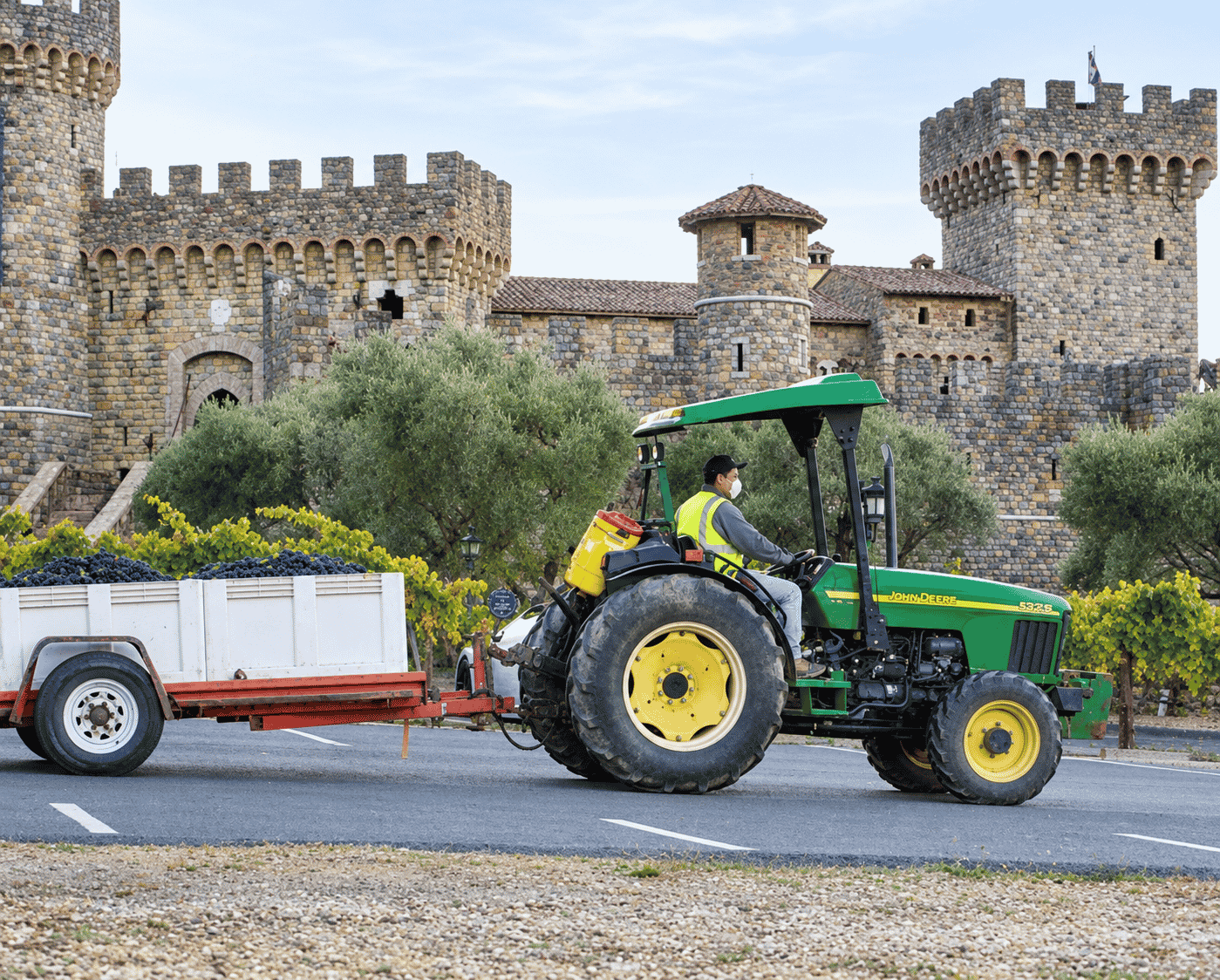
Although its story began in Europe, Gewürztraminer has found an intriguing home in California. At Castello di Amorosa, we source our Gewürztraminer grapes from Mendocino County, where the region's cooler growing conditions help preserve the variety's distinctive floral aromatics, fresh fruit character and natural spice.
"Since purchasing the Dennison property in Anderson Valley and plating our own vines there, we grow all of our Gewurztraminer on this single property. This allows us to both farm the vineyard as we see fit and secure a permanent source for this uncommon variety" says our Director of Winemaking, Peter Velleno.
He explains, "Dry Gewurz is harvest first when the sugar level is moderate and the acidity is very high. We target areas of the vineyards that are shown to have the highest natural acidity by chemical analysis. This gives us a dry, fresh, vibrant wine with incredible aromatics (rose, lychee). It is my personal favorite Castello white wine because the aromas leap of your glass and you get some wonderful floral and fruit flavors that make you “think sweet” without being sweet. Many people have never had Gewurz made in this dry style in California.
Dolcino is harvested approximately a week later when the grapes have developed higher sugar levels, ensuring that the finished wine will remain quite sweet. The character of Gewurztraminer stills shines but the wine favors a lucious mouthfeel and expressive flavors. This classic is one of the original wines Dario made when the Castello opened in 2007. The Dolcino has obvious sweetness, but it is not over the top. Just enough to perfectly compliment the flavor profile.
The Late Harvest Gewurz is harvested much later, well after the normal harvest is finished. The grapes are affected by Botrytis fungus, or “noble rot”, which greatly concentrates the sugar in each grape and reduces yields, producing a very sweet dessert wine. The flavors change to those of honey, dried fruit, and spices. The Late Harvest is a completely different interpretation of Gewurztraminer and demonstrates the diversity of styles we can produce from a single vineyard".
Thoughtful vineyard sourcing and careful winemaking allow us to showcase the grape's signature personality through three distinctly Californian expressions. The Dolcino Gewurztraminer opens with delicate elderflower and honeysuckle, followed by lush pear, lychee and vibrant tropical nuances. It is the romantic side of the grape: floral, generous and beautifully expressive. Our Dry Gewurztraminer takes a different path, with aromas of crushed rose petals and orange zest leading into bright lemon and grapefruit with whispers of ginger—a brighter, more citrus-driven expression. And our Late Harvest Gewurztraminer reveals yet another side of this remarkably versatile grape, offering a richer, more decadent expression in which Gewürztraminer's naturally exotic fruit, floral perfume and spice are beautifully suited to a dessert-style wine. Three expressions. Three interpretations. One unmistakable grape.
For those willing to surrender to its charms, Gewürztraminer offers more than simply a glass of white wine. It is a reminder that wine does not always have to be serious to be sophisticated, nor powerful to be memorable. Sometimes elegance arrives wearing the perfume of a rose. Sometimes complexity tastes like lychee, ginger, citrus and spice. And sometimes the most interesting wine on the table is the one that refuses to behave like anything else. Gewürztraminer has spent centuries traveling through Europe's Alpine foothills and onward to vineyards around the world, gathering stories along the way. Perhaps that is why it remains so unforgettable.
Gewürztraminer was never meant to blend quietly into the crowd. It was meant to be remembered.